
Development of an Automated Retail Self‑Checkout Vending Platform

Scaling Retail Innovation: Manufacturing an Automated Self-Checkout Platform
Executive Summary
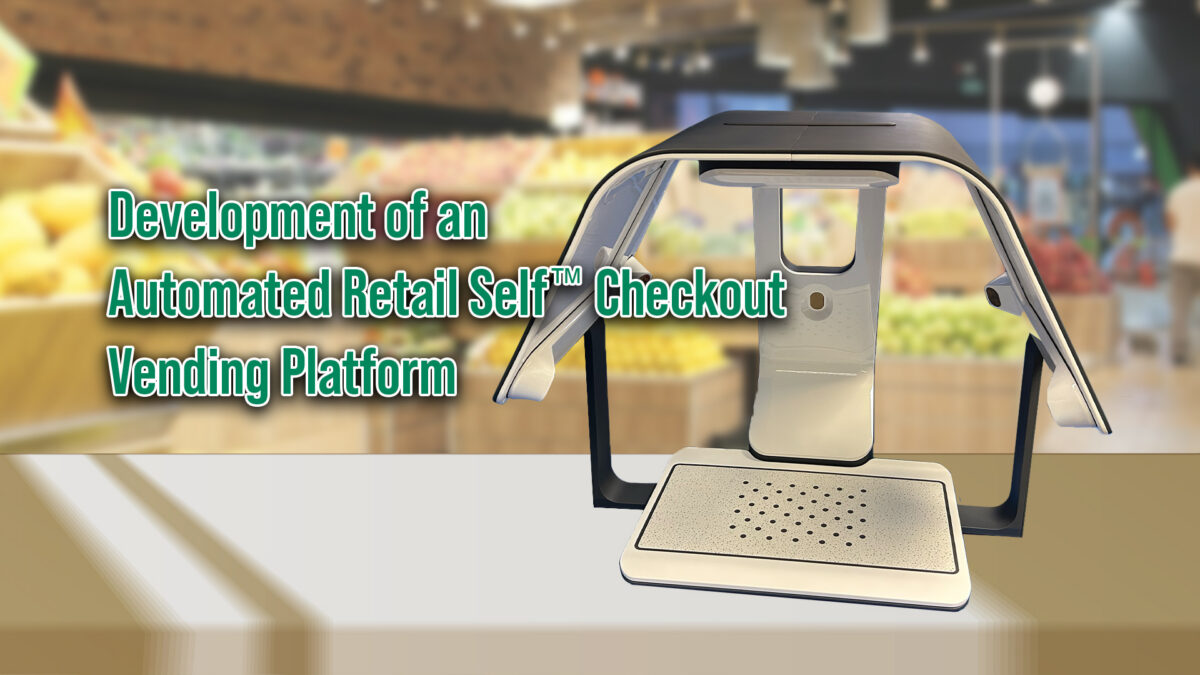
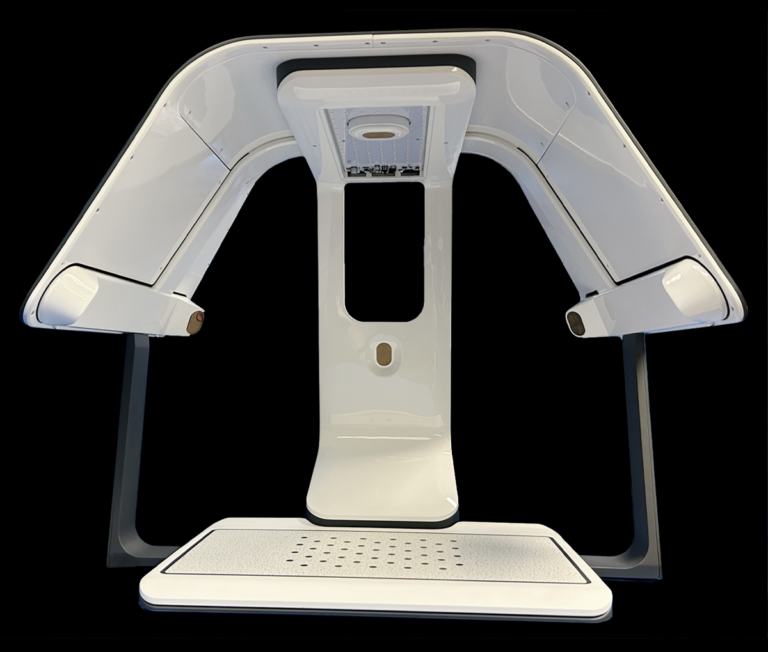
FKI USA was engaged to industrialize and manufacture a highly advanced automated retail self-checkout device. The system, designed to instantly recognize and process multiple items without traditional barcode scanning, presented strong technical innovation but required significant refinement for commercial viability.
FKI USA led the comprehensive engineering redesign, focusing on manufacturing cost reduction, deployment scalability, and field serviceability, ultimately supporting a massive, successful global rollout to over 20,000 retail sites.
The Challenge: Industrializing Next-Generation Retail Technology
The first-generation automated retail platform successfully proved the concept of rapid, multi-item visual recognition. The initial industrial design heavily prioritized customer experience, aesthetics, and core technical performance. However, transitioning this concept from a functional prototype to a globally scaled hardware fleet exposed critical operational challenges:
- High initial manufacturing and fabrication costs
- Logistics inefficiencies due to complex product packaging
- Difficult and time-consuming field installation procedures
- Limited mechanical reliability under high-traffic retail conditions
- Complex long-term service and maintenance requirements
FKI USA was tasked with re-engineering the physical platform to achieve aggressive cost targets, improve structural robustness, and accelerate production to meet strict trade show launch deadlines.
Manufacturing Cost Optimization & Supply Chain Efficiency
To enable a profitable, large-scale rollout, FKI USA executed a comprehensive cost-down strategy across the manufacturing lifecycle. This included the consolidation of fabricated components, optimizing sheet metal designs for faster cutting and bending, and simplifying the finishing and coating processes.
By aligning global sourcing and standardizing vendor requirements, FKI USA stabilized the supply chain and reduced material costs, all while improving packaging density to secure massive logistics cost savings.
Engineering Redesign & DFM Strategy
The redesign initiative was anchored in Design-for-Manufacturability (DFM), Design-for-Assembly (DFA), and Design-for-Service (DFS) principles. FKI USA engineers systematically evaluated every component of the platform. Key engineering interventions included:
- Modularization: Breaking down complex mechanical assemblies into standardized, easily producible subassemblies.
- Material & Fastener Optimization: Simplifying enclosure structures and drastically reducing the overall fastener count to accelerate assembly times.
- Accessibility: Re-architecting the internal layout to provide technicians with unobstructed access to critical electronic components.
These targeted measures enhanced the machine’s mechanical reliability while significantly reducing both production complexity and assembly labor hours.
Global Deployment: Packaging, Installation, and Lifecycle Support
Shipping and installing delicate technology at 20,000 separate locations requires foolproof logistics. FKI USA developed modular packaging concepts that drastically reduced the risk of shipping damage while maximizing container space.
Furthermore, the installation process was simplified to require minimal specialized tools. To lower the Total Cost of Ownership (TCO) for the client, FKI USA integrated quick-access panels, simplified wiring harnesses, and standardized service kits. This DFS (Design for Service) approach ensures that when field repairs are necessary, they are executed rapidly, maximizing operational uptime for the retail operator.
Proven Results: 20,000+ Global Retail Installations
Despite an aggressive development schedule, FKI USA successfully produced three successive prototype iterations and pre-pilot production units in time for the client’s industry trade show launch.
Key Project Outcomes:
- Successful unit cost reduction, enabling a profitable global deployment strategy.
- Significantly improved mechanical performance, structural rigidity, and field reliability.
- Streamlined logistics, installation, and field service procedures.
- On-time delivery of all prototypes and launch units within budget.
- Flawless execution of a global rollout across more than 20,000 retail locations.
Conclusion
The FKI USA engineering redesign demonstrates how thoughtful industrial engineering, manufacturing optimization, and intelligent deployment planning can transform a technically innovative prototype into a scalable commercial platform.
By addressing manufacturability, cost, serviceability, and logistics simultaneously, FKI USA ensured both technical excellence and commercial viability.
More About Dual Source Manufacturing
Frequently Asked Questions
What role does a contract manufacturer play in launching retail hardware?
A specialized contract manufacturer like FKI USA takes a functional prototype or industrial design and engineers it for mass production.
This involves Design for Manufacturing (DFM) to lower unit costs, consolidating supply chains, optimizing materials for durability, and designing packaging for safe, scaled global deployment.
How does Design for Manufacturing (DFM) lower hardware production costs?
DFM lowers costs by intentionally simplifying the product’s design before mass production begins.
For retail hardware, this often includes reducing the total fastener count, standardizing sheet metal bends to speed up fabrication time, modularizing complex assemblies, and optimizing the design to fit more efficiently into shipping containers.
How do you ensure retail hardware survives high-traffic commercial environments?
Reliability is engineered during the DFM phase.
For example, in automated retail kiosks, we analyze load distribution, vibration resistance, and potential impact points. By reinforcing critical stress areas—such as adding lower structural support arms to top-heavy enclosures—we prevent long-term fatigue and reduce expensive field warranty claims.
What is Design for Service (DFS) in hardware manufacturing?
Design for Service (DFS) is the practice of engineering a product so that it can be easily maintained and repaired in the field. For retail self-checkout platforms, FKI USA implements quick-access service panels, simplified wiring harnesses, and modular component layouts so field technicians can replace parts rapidly, minimizing machine downtime.
Can FKI USA handle both the prototyping and the mass deployment of retail hardware?
Yes. FKI USA is structured to support the entire product lifecycle.
We rapidly produce prototype iterations and pre-pilot units for trade show launches and validation testing, and then scale those optimized designs into full production runs capable of supporting rollouts to tens of thousands of global locations.
Ready to Scale Your Retail Hardware?
Transitioning an innovative prototype into a globally deployable, cost-effective commercial platform requires precise engineering and manufacturing expertise. Whether you need DFM optimization, sheet metal fabrication, or complete electromechanical assembly, FKI USA is ready to execute.
- Category: Case Studies
- Tag: Dual Source Single Supplier Manufacturing, Metal Stamping