Dual Source Single Supplier Manufacturing

Global appliance OEMs face constant pressure to reduce costs without sacrificing resilience. Learn how FKI USA’s Dual Source Single Supplier Manufacturing™ model combines offshore efficiency with domestic agility to protect your supply chain from costly disruptions.
White Paper | Reshoring Appliance Manufacturing: Class A Stamping & Transfer Tooling

Executive Summary

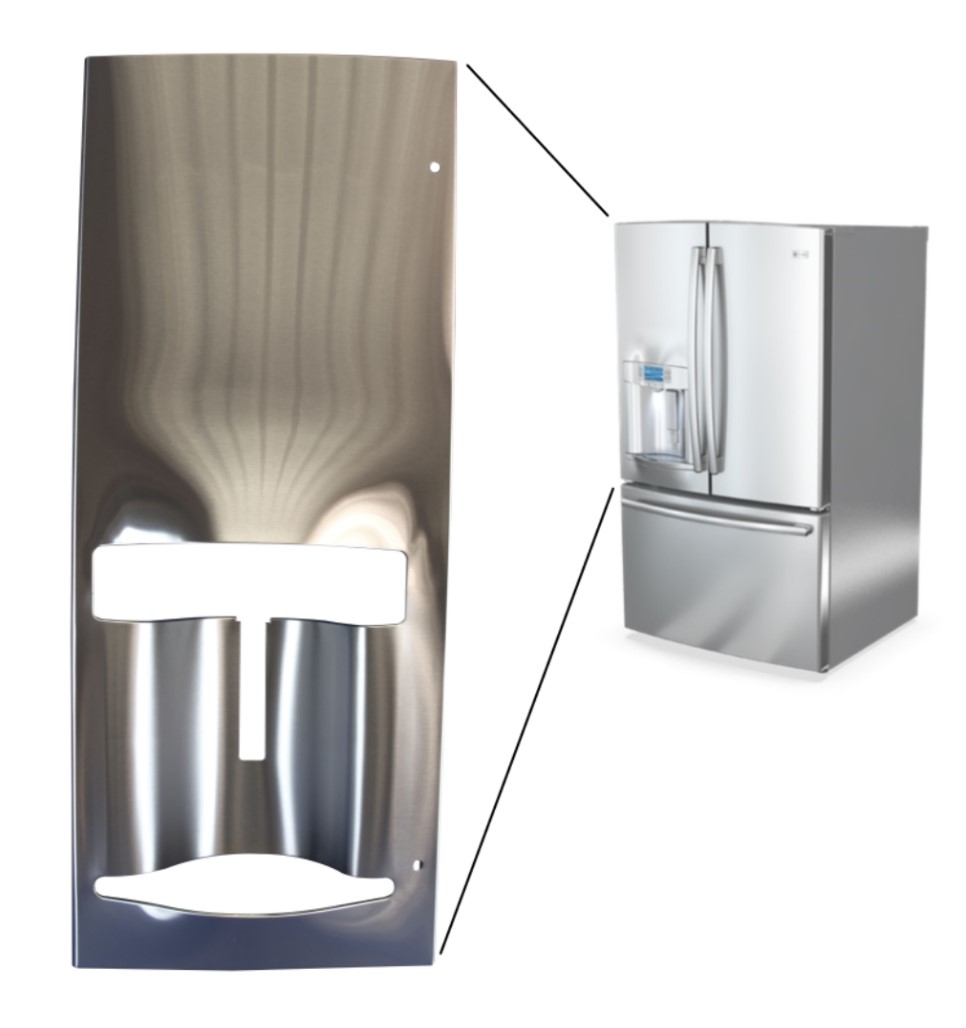
A major domestic appliance manufacturer initiated a strategic program to reshore refrigerator production to the United States. As part of the modernization effort, FKI USA was contracted to design and deliver a flexible, multi-material stamped transfer tooling system for producing high-cosmetic refrigerator door skins across both carbon steel and stainless steel product families. The tooling needed to support four product configurations, textured and non-textured finishes, and stringent surface appearance requirements—all within a high-mix, low-volume production environment.

FKI USA delivered prototype tooling and preliminary parts in just over 8 weeks, followed by pre-pilot parts in 12 weeks, spanning an unusually large range of materials including carbon steel, Stainless 200/300/400 series, and pre-painted textured and non-textured surfaces. Traditionally, such material variation necessitates multiple dedicated die sets. Instead, FKI USA engineered a breakthrough system featuring real-time, automatic tool adjustment based on bar-code identification of incoming material. This eliminated changeovers and protected high-cosmetic surfaces through controlled, precision-adjusted forming.

The result was a production solution that enabled the manufacturer to run premium and economy materials side by side, meet stringent cosmetic quality requirements, reduce downtime, lower operational costs, and fully achieve all program deliverables on schedule.

Introduction

As the manufacturing sector accelerates reshoring initiatives, flexible tooling has become a critical enabler of domestic production viability. For a leading appliance manufacturer, the ability to produce refrigerator door skins with premium cosmetic quality and material versatility was essential in establishing a modern U.S. production cell.

FKI USA was engaged to develop a next-generation stamped transfer tool system capable of handling multiple material families—including carbon steel and three major stainless steel series—while meeting demanding surface finish and dimensional requirements for high-cosmetic exterior panels.

Customer Objectives

The manufacturer required a production system that could:

  • Produce high-cosmetic, Class A exterior door skins.

  • Support four product configurations.

  • Process Carbon Steel, Stainless 200, Stainless 300, and Stainless 400 series.

  • Form textured and non-textured pre-painted material.

  • Transition instantly between materials without tooling changeovers.

  • Maintain tight tolerances and surface integrity.

  • Meet aggressive development and launch timelines.

Scope of Work

FKI USA’s scope included:

  • Engineering a multi-material stamped transfer tool system.
  • Designing high-cosmetic forming surfaces and protection zones.
  • Delivering prototype and pre-pilot parts under a compressed schedule.
  • Developing an automated, material-responsive adjustment mechanism.
  • Ensuring full compatibility with carbon and stainless steels in multiple finishes.
Engineering Challenges

Producing high-cosmetic refrigerator door skins across multiple metal families involves a unique combination of technical hurdles:

Material Variability

The metals required for this program exhibit vastly different forming behaviors, including:

  • Carbon steel
    • Consistent, predictable forming
    • Thin-gauge springback concerns
  • Stainless 200 Series
    • Moderate ductility, variable strength
  • Stainless 300 Series (austenitic)
    • High ductility, high work hardening
    • Susceptible to surface distortion under uneven pressure
  • Stainless 400 Series (ferritic)
    • Lower ductility, higher risk of cracking on cosmetic bends
  • Pre-painted and textured materials
    • Damage-sensitive Class A surfaces
    • Strict cosmetic requirements

In a high-cosmetic environment, material transitions typically require separate dies to preserve surface quality and dimensional accuracy.

High-Cosmetic Requirements

Producing visible exterior panels required:

  • Controlled pressure management
  • Precision forming across all radii and transitions
  • Surface protection strategies (low-friction interfaces, controlled wipe zones)
  • Minimal tool marks, distortion, or read-through
High-Mix, Low-Volume Production

The customer sought a production system that could switch between:

  • Stainless → Carbon
  • 200 → 300 → 400 series
  • Textured → Non-textured
  • High cosmetic → Standard cosmetic

…without shutting down the line or exchanging dies.

Compressed Development Schedule

Despite complexity, prototypes were required in just over 8 weeks, with pre-pilot production in 12 weeks.

The Solution​

FKI USA developed a multi-material, automatically adjusting stamped transfer tooling system capable of producing high-cosmetic parts across all material families.

Multi-Material Adaptive Die Design

The tooling utilized:

  • Variable-pressure forming zones
  • Adjustable crowning and compensation sections
  • Tunable radii transitions for different springback characteristics
  • Surface isolation to protect cosmetic finishes
  • Forming strategies tailored to carbon steel and stainless steel variability

This eliminated the need for material-specific die sets.

Bar-Code Driven, Real-Time Tool Adjustment

A key innovation was the automatic adjustment of tool parameters based on incoming material identification:

  • Material type read via barcode
  • Tooling adjusts forming pressures, hold-down forces, offsets, and timing
  • Applies material-specific compensation profiles instantly
  • Zero operator intervention required
High-Cosmetic Forming Protection

Because refrigerator door skins require premium visual quality, the tooling incorporated:

  • Controlled, low-friction surface interfaces
  • Targeted support zones to minimize read-through
  • Specialized forming inserts to protect pre-painted finishes
  • Precision-aligned wipe areas and radii forming
  • Tool steel and coatings engineered to prevent micro-marring
Compressed Development Execution

FKI USA achieved:

  • Prototype tooling + preliminary components in 8+ weeks
  • Pre-pilot parts in 12 weeks
  • Carbon and stainless materials fully validated
  • High-cosmetic prototypes delivered at each stage
Project Outcomes
Unmatched Production Flexibility

The tooling enabled:

  • Instant transition between carbon and stainless steels
  • Seamless switching among Stainless 200, 300, and 400 series
  • Compatibility with textured/non-textured pre-painted materials
  • High-cosmetic and standard-cosmetic modes
  • All four product configurations without a single tool changeover
High-Cosmetic Quality Preservation

Results included:

  • Mirror-consistent panel flatness
  • No cosmetic read-through or surface distortion
  • Excellent radius definition across all material families
  • Stable forming results even with optical-grade finishes
Reduced Operational Costs

Benefits realized by the manufacturer:

  • Major reduction in downtime (no line changeovers)
  • Elimination of separate dedicated dies for each material type
  • Ability to run premium or economy materials interchangeably
  • Lower scrap and rework costs, particularly for cosmetic panels
Improved Production Efficiency

Operational gains included:

  • True high-mix, low-volume capability
  • Rapid responsiveness to scheduling and inventory needs
  • Minimal operator training required
  • Ability to integrate new materials without new dies
Conclusion

FKI USA successfully engineered and delivered a next-generation adaptive stamping system that enabled high-cosmetic refrigerator door skin production from carbon steel and multiple stainless steel series, all within a high-mix, low-volume environment.

By incorporating real-time tool adjustment driven by material identification—combined with advanced cosmetic-protection forming design—FKI USA allowed the manufacturer to eliminate traditional changeover challenges and fully support its U.S. reshoring initiative.

The project was delivered on schedule, achieved all program requirements, and significantly enhanced the manufacturer’s production flexibility, cost efficiency, and cosmetic-quality performance.

Have an oversized or non-standard requirement?

Our engineering team can build the path to production.